
A reflection on materials, climate, sustainability and the role of craftsmanship in the quality of spaces, based on a conversation between CURO and Madeirol, a Brazilian bespoke furniture company.
In architecture, the choice of a material rarely comes down to appearance alone. How it ages, responds to its environment, withstands everyday use and can be maintained over time are all part of the design process.
When it comes to bespoke furniture, this relationship becomes even more evident. Design defines proportions and functions, but it is through material selection, component development and manufacturing precision that many of the project's decisions take shape.
To explore the relationship between design and execution, CURO invited Isabela Fonseca, from Madeirol's Marketing team, to share the experience of a Brazilian company with over 70 years of history, its own factory in Rio de Janeiro and more than 40,000 completed projects.
This editorial collaboration stems from a desire to approach architecture from different perspectives, bringing spatial thinking closer to the technical knowledge of those who turn a design into a tangible solution. Between Portugal and Brazil, the conversation explores questions such as the influence of climate, material durability and the responsibility behind design and manufacturing choices.
Between architectural intent and execution
In architecture, every decision seeks to fulfil an intention: to establish a particular relationship with light, organise circulation, enhance a material or make a space more functional. But for that intention to become reality, it is essential to understand what happens between design and execution.
At Madeirol, this process begins with an assessment of the dimensions and individual needs of each household. The 3D design allows the furniture layout, module dimensions, depths, openings and internal organisation to be visualised before production begins.
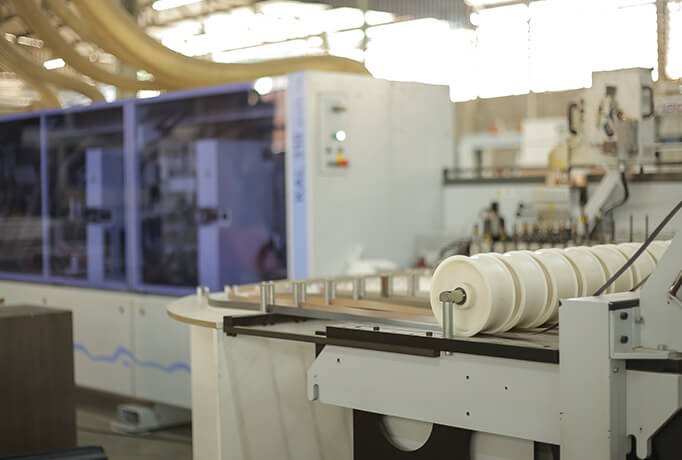
As Isabela explains, 3D design makes it possible to preview the proposed solution and examine the relationships between its different components."Once the design has been approved and all measurements and selections confirmed, the technical details are integrated into the manufacturing process through CAD/CAM systems. RFID identification allows each component to be tracked throughout production, helping to organise the process and reduce errors and rework."
This continuity between design and manufacturing is particularly relevant in bespoke furniture. A wardrobe, for instance, should not be conceived merely as a storage volume, but as an element that contributes to the organisation of space, circulation and the everyday experience of those who use it.
Understanding technical possibilities from the outset makes it possible to anticipate challenges, test solutions and make more informed decisions. Precision does not necessarily limit creativity; on the contrary, it can create the conditions for a project to be executed with greater coherence.
Designing for durability
Durability is often associated with the resistance of materials, but it begins long before the choice of finish. Module dimensions, component quality, manufacturing precision and the suitability of the furniture to its users' needs are equally decisive.
When developing bespoke furniture, the ability to assess dimensions, depths, openings and internal organisation before production makes it possible to identify adjustments and anticipate potential challenges. This planning stage helps reduce errors and bring the final solution closer to the needs initially identified.
Madeirol's experience highlights the importance of this foresight. The use of three-dimensional models makes it possible to assess the relationships between different elements and verify whether the proposed solution responds to the actual conditions of the space.
From an architectural perspective, this approach also invites us to consider the adaptability of individual elements. A piece of furniture does not need to remain unchanged to continue being useful. A versatile internal configuration, for instance, can accommodate changes in daily routines without requiring the entire piece to be replaced.
The children's bedroom is a clear example of how durability must be considered beyond the resistance of materials. As a child grows, their needs change: play areas gradually give way to study spaces, toys are replaced by books and new objects, and furniture arrangements need to adapt to these transformations. A well-considered design can accommodate different stages of growth without requiring the entire furniture set to be replaced. By prioritising versatile structures, adaptable storage and configurations that can evolve alongside the child, it is possible to extend the lifespan of furniture and avoid unnecessary replacements.
Designing for durability also means creating spaces capable of evolving with life, without every change requiring a fresh start.
Climate also influences material selection
The relationship between materials and their environment is another aspect that deserves attention. Portugal and Brazil have distinct climatic conditions, although significant differences also exist between the various regions within each country.
In Portugal, particularly in the north, humidity and indoor ventilation can present specific challenges. In Brazil, certain regions are characterised by high temperatures and significant humidity levels. These conditions can influence material performance and should be taken into account when selecting construction solutions.
"The choice of materials and construction solutions should consider the environmental conditions in which the furniture will be installed, as well as the intended use of each piece,"explains Isabela.
Exposure to humidity, temperature fluctuations, ventilation and everyday usage conditions are therefore relevant factors when assessing a material. Appearance, colour and texture are not enough: it is also essential to understand its technical properties and the conditions for which it was designed.
Sustainability beyond materials
Sustainability in architecture is often associated with the origin and properties of materials. However, it should also be considered in relation to design decisions, manufacturing efficiency, maintenance and the lifespan of individual elements.
At Madeirol, the integration of design and production through CAD/CAM systems and RFID component identification contributes to manufacturing precision and a more organised industrial process.
Preventing errors and the need to remake components can contribute to a more efficient use of resources. Nevertheless, manufacturing precision is only one dimension of this issue. To assess the environmental impact of a solution, it is also important to consider material sourcing, production processes, repair possibilities and the destination of components at the end of their useful life.
In a child's bedroom, sustainability is also about the ability to accommodate growth. Well-planned furniture makes it possible to adapt the organisation and use of the space to changing needs, without having to replace every piece at each new stage. Whenever possible, prioritising versatile solutions that can be rearranged or adjusted over time helps extend the lifespan of furniture and reduce unnecessary replacements.
Designing with an awareness of time
The quality of a space depends on more than what we see when it is completed. It also depends on how materials respond to their environment, how individual elements are made and how the overall design accommodates the transformations of everyday life.
The dialogue between Portugal and Brazil offers an opportunity to consider different climatic conditions, manufacturing practices and approaches to durability. The aim is not to find a single solution for every context, but to better understand the variables that shape each decision.
In architecture, designing with an awareness of time means recognising that spaces continue to be used, transformed and reinterpreted long after construction is complete. The quality of these experiences often begins with the least visible decisions: the specification of a material, a construction detail or the way a design is prepared to become reality.